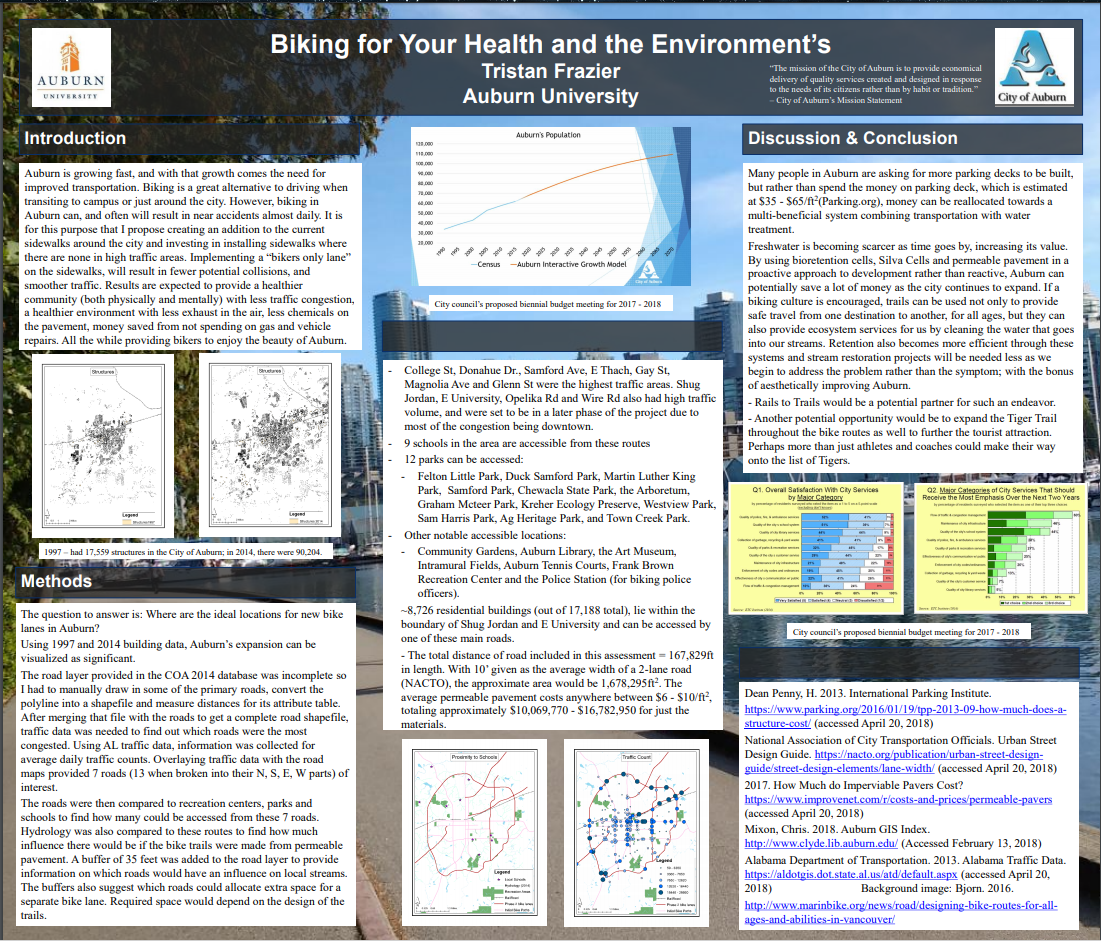
Our final project was an independent poster designed to solve a problem of our choosing. The issue I decided to address was biking in Auburn, AL and the possible benefits that could come with it. In large, the poster displays the project itself, but the take home message from it all is that by designing safer biking roads in a proactive manner, we can also create ecosystem services such as carbon sequestration, water filtration and retention, and beautify auburn by incorporating green infrastructure into its design. Auburn has already mentioned in the city council meeting at the end of 2016 that they intend to not only work on transportation in the city of Auburn, but also intended on repaving bike ways and roads as things stand. Why not take it a step further and make Auburn a model in green infrastructure?
Liquefaction as it relates to Wetland Ecosystems
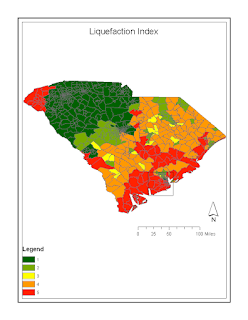
I chose to base my project on liquefaction on the effects it had on wetland ecosystems. I went into this project questioning the damage that would follow any seismic event and the economic impact that would have on local populations but came out with an entirely new interest. With 90 liquefaction sites in this area, 16 intersected with wetlands. The primary wetland type intersected was Freshwater Forested/Shrub lands while of the 2 types of liquefaction, the dominant in intercepted was crater filled. The data really didn't display any correlation between the liquefaction and wetland location/prevalence. It did raise a potential future research project though: "Could it be possible that crater filled areas provide suitable land for wetland growth? I spoke to my professor in Wetland Ecology & Management and while he said there's never been a study done on that idea, it could make sense, since wetlands need broken up soil to properly function and therefore a ...
Comments
Post a Comment